Chavurat Derekh HaMashiach

Living the Journey, Sharing the WORD

  • Recorded live under an oak tree somewhere between Spring Hill and Sinai.—

    Cast of Characters- Kenny the Wise — three‑legged philosopher,

    Torah commentator, nap specialist –

    Isaiah — poetic prophet, professional metaphor generator –

    Paul — apostle, recovering Pharisee, writes long letters –

    James — concise, practical, allergic to theological nonsense –

    Squirrel — loud, twitchy, easily offended, hoards acorns and opinions —

    The Debate Begins

    Kenny:

    Welcome, esteemed biblical voices and woodland creature. Today’s question is simple: Does keeping the Sabbath save your soul?

    I’ll begin: No. It saves your sanity, your spine, and your relationships—but not your soul.

    Now, Isaiah, you’re up. Try not to speak in riddles this time.—

    ISAIAH SPEAKS

    Isaiah:

    My friend, I speak only as the Spirit moves.> “Blessed is the one who keeps the Sabbath.” > — Isaiah 56:2

    Blessed, yes. Saved? That’s not what I said. Shabbat is delight, rest, justice, and joy. It is a taste of the world as it should be. But salvation? That comes from the Holy One, not from your calendar.

    Kenny:

    Beautiful. Poetic. Slightly vague. Classic Isaiah.—PAUL ENTERS WITH A STACK OF LETTERS

    Paul:

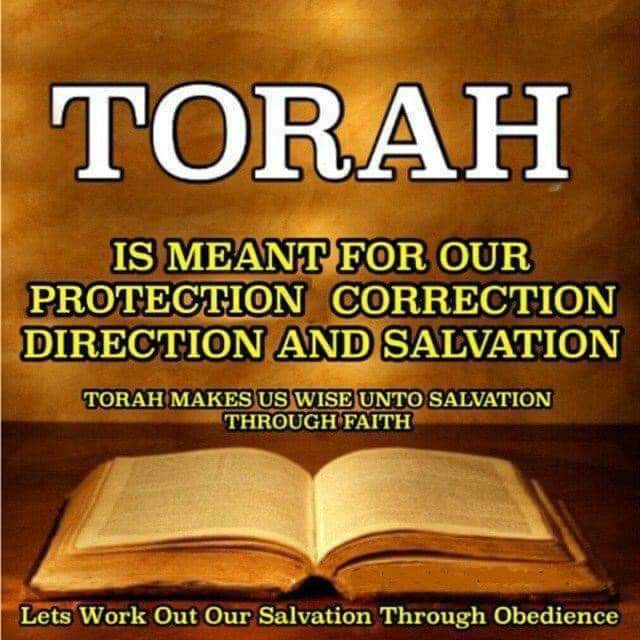
    If I may— Salvation is by grace through faith. Not by works. Not by law. Not by Sabbaths.

    “Let no one judge you regarding a Sabbath day.” — Colossians 2:16

    If Sabbath‑keeping saved the soul, I would have said so. Instead, I said the opposite.

    Kenny:

    Paul, thank you. Also, your letters are long. Maybe try bullet points next time.—

    JAMES CLEARS HIS THROAT

    James:

    Faith without works is dead. But works without faith are just… chores.

    I never said Sabbath saves you. I said your faith should produce a life that looks like something.

    If Sabbath helps you live rightly—great. If you think it earns salvation—nope.

    Kenny:

    Concise. Practical. Slightly judgmental. James, you’re like a spiritual sergeant major.—

    THE SQUIRREL INTERRUPTS

    Squirrel:

    EXCUSE ME. I HAVE SOMETHING TO SAY.

    Kenny:

    Oh boy. Here we go.

    Squirrel:

    I don’t know about salvation, but I do know that humans need rest. You run around like panicked chipmunks all week. You hoard stress like I hoard acorns. You forget to breathe. You forget to sit. You forget to look at trees.

    Sabbath is good for you. Take the nap. Eat the snack. Stop making everything complicated. Kenny:

    Honestly… that’s the most profound thing you’ve ever said.—

    THE FINAL ROUND

    Kenny:

    So let’s summarize:- Isaiah: Sabbath brings blessing, joy, and justice—but not salvation. – Paul: Salvation is by grace, not by Sabbath‑keeping. –

    James: Sabbath is good fruit, not the root of salvation. –

    Squirrel: Humans need naps.

    And me?

    I say this: Shabbat is not a ladder to heaven. It is a weekly hammock for the weary.

    God saves the soul. Shabbat saves the nervous system. If you want to keep it—keep it with joy. If you don’t—your salvation is not in danger.

    If this spoke to you, let it speak through you. Share it!

    Kenny:

    I’m ready for a nap, SEE YA!!!

  • Many of history’s most influential scientists recognized that creation points beyond itself. Newton, Pascal, Mendel, Maxwell, Pasteur, and others openly affirmed belief in a Creator, seeing their scientific work as uncovering the order God built into the universe. Other lists of major scientists — including Einstein, Galileo, Bacon, Schrödinger, and Francis Collins — likewise document that many leading thinkers held theistic convictions. Creation‑research historians also note that many foundational scientists viewed their discoveries as “thinking God’s thoughts after Him.” In Messianic understanding, this Creator is the God of Avraham, Yitzchak, and Ya’akov — revealed fully through His Messiah, Yeshua.

    When someone cannot see this, Scripture describes it as a veil over the heart. But veils can be lifted. When they are, call upon Yeshua the Messiah, who is near to all who seek Him.

    We speak this in love. None of us are promised tomorrow. As the Psalmist declares: “The heavens declare the glory of Elohim; the skies proclaim the work of His hands.” Creation itself is a continual witness.

    Even at the microscopic level, DNA contains a coded language — information — which many scholars argue points strongly toward intelligent design rather than randomness. Modern discussions of design in nature continue to highlight this debate. All creation testifies to the handiwork of the Messiah, through whom all things were made.

    The spiritual battle is real. What happens in the unseen realm shapes what we experience in the visible one. Much has been done to hide or discredit this reality, but truth remains truth whether acknowledged or not. Even today, many scientists — including Nobel‑level thinkers — maintain belief in God despite cultural pressure to abandon it. So we pray for mercy — that the Ruach HaKodesh would open eyes, soften hearts, and reveal the truth of Yeshua to all who are searching, hurting, or wandering.

  • Atheism is, by definition, a belief position. Not believing in God is still a belief about God. Every worldview that ends in ‑ism describes a belief framework — humanism, materialism, naturalism, theism, atheism.

    None of these are scientific categories; they’re philosophical stances. And here’s the key point: You cannot prove a universal negative. No atheist can produce empirical, testable, repeatable evidence that no God exists anywhere, at any time, in any dimension, beyond all human perception. That’s logically impossible.

    So atheism isn’t a conclusion based on evidence — it’s a conclusion based on interpretation of evidence. Interpretation is belief. Belief is a belief system.

    Atheists don’t know God doesn’t exist. They simply believe He doesn’t. Which means atheism is, unavoidably, a belief system. If you claim certainty about something you cannot prove, you’re not doing science. You’re doing faith.

  • Concerning pauls instruction to Timothy and the idea of women pastor’s. “I do not permit a woman to teach or exercise authority over a man.”

    1 Corinthians 7:10–12 he contrasts “not I, but the Lord” with “I, not the Lord.” The first refers to teachings Yeshua already gave on divorce; the second refers to a situation Yeshua never addressed, so Paul provides an authoritative ruling.

    In 1 Corinthians 7:6 he marks something as a concession, not a command, showing the difference between universal instruction and pastoral allowance.

    In 1 Corinthians 7:25 he says he has no direct command from the Lord but gives trustworthy judgment, meaning Yeshua gave no teaching on that topic.

    In 1 Corinthians 14:37 he insists his instruction is the Lord’s command, showing he knows when he is relaying divine authority.

    In 2 Corinthians 8:8 he distinguishes between commanding and advising.

    In 1 Thessalonians 4:15 he cites a direct revelation from the Lord, not personal reasoning.

    Now the cultural reason Paul would have told Timothy “I do not permit a woman to teach or exercise authority over a man.” Ephesus was a Greek‑Roman city where public teaching was dominated by men, and women were widely viewed as uneducated, unreliable, or socially inferior. A woman teacher in that setting would have been dismissed outright, mocked, or treated as a joke before she ever opened her mouth. The gospel itself—not the woman—would have been discredited. Paul’s instruction was strategic: Timothy was leading a fragile, young congregation in a hostile, male‑dominated culture, and Paul wanted to avoid giving opponents an easy excuse to reject the message. This was not a statement about women’s ability or worth; it was a tactical decision shaped by the cultural realities of Ephesus, where credibility depended heavily on male public teachers. Paul’s pattern elsewhere—affirming Priscilla, Phoebe, Junia, and others—shows he had no theological objection to women leading. His concern in Timothy was audience reception, not divine prohibition.

  • This question comes up a lot, especially when people read passages like Romans 3:28 and Galatians 2:16. Paul is crystal clear that no one is justified by works of the Law, and that salvation is by faith in Messiah alone. So does Sabbath‑keeping contradict the gospel?The short answer: It depends entirely on how a person approaches it.—

    1. When Sabbath‑Keeping Does Undermine the GospelIf someone treats Shabbat as a requirement to earn salvation, or as a boundary marker that determines who is “truly saved,” then yes — that absolutely undermines the gospel message.Paul warns that adding any command as a condition for justification:-

    nullifies grace –

    makes Messiah’s sacrifice “of no effect” – places a person under obligation to keep the whole Torah That’s the very error Paul confronts in Galatians.—

    2. When Sabbath‑Keeping Does Not Undermine the GospelThere is a completely different posture — one rooted in gratitude, identity, and worship.

    Many believers, including Messianic Jews and Messianic Gentiles, keep Shabbat not to be saved, but because they are saved. They see it as:-

    a gift –

    a rhythm of rest –

    a way to honor God –

    a sign of respect for His Word This is the same heart James speaks from when he says:

    “I will show you my faith by my works.”

    James isn’t arguing that works save us. He’s saying that genuine faith naturally produces visible fruit.Shabbat, in this sense, becomes an expression of faith — not a prerequisite for it.—

    3. The Real Issue Is Not the Day — It’s the DirectionThe gospel is undermined when someone says:- “You must keep Shabbat to be justified.” – “You’re not saved unless you do this.” –

    “Faith in Messiah isn’t enough.”But the gospel is honored when someone says:-

    “Messiah saved me by grace, and now I choose to walk in His ways.” –

    “I keep Shabbat because I love God, not because I’m trying to earn Him.” –

    “My works don’t save me — they reveal the faith that already does.”

    Same action. Different direction. One leads to bondage. The other leads to worship.—

    4. A Healthy, Balanced ConclusionRequiring Sabbath‑keeping for salvation undermines the gospel. Choosing Sabbath‑keeping as a response to salvation expresses the gospel.Faith saves. Works reveal. Grace comes first.

    Obedience flows after. That’s Paul. That’s James. And that’s the heart of a mature Messianic walk.

  • Awareness is one of the quietest forces in the human experience. It doesn’t argue, demand, or insist. It simply shapes how we see long before we realize it’s doing so. When we open the Bible, we rarely come to it empty-handed. We bring our stories, our wounds, our expectations, and our definitions of what goodness, justice, or love should look like.This is why two sincere readers can encounter the same passage and walk away with entirely different impressions. The text hasn’t changed. The difference lies in the lens through which each person is reading.This isn’t a flaw in the reader or the Bible. It’s simply how human perception works.—

    1. Awareness Shapes What We Notice Psychologists describe this as selective attention: the mind naturally gravitates toward what feels familiar, relevant, or emotionally charged. In spiritual language, we might call it “the eyes of the heart.”- If we expect Scripture to be comforting, we notice comfort. – If we expect it to be harsh, we notice harshness. – If we’re wrestling with authority, divine authority feels sharper. – If we’re longing for mercy, mercy shines brighter. Our awareness acts like a filter—not to distort the text, but to interpret it through the reality we’re living.—

    2. What We Find Often Reflects What We BringWhen we read the Bible, we’re not just learning about God or ancient Israel. We’re learning about ourselves. Our reactions—whether comfort, confusion, resistance, or awe—are meaningful. They reveal:- our values – our fears – our assumptions – our hopes – our unresolved questions The Bible becomes a mirror as much as a message. It doesn’t just speak to us; it reveals us.This is not confrontational. It’s invitational.—

    3. Scripture Invites Reflection, Not Defensiveness. A non-confrontational approach to interpretation begins with a simple shift: Instead of asking, “Is this passage good or bad?” we can ask, “What does my reaction to this passage reveal about my inner world?” This removes pressure. It removes the need to defend God or critique Him. It removes the fear of “getting it wrong.” It turns reading into reflection rather than argument.—

    4. The Bible as a Tool for Awareness When we become aware of our filters, something subtle happens: we begin to see the text more clearly—not because we force ourselves to agree with it, but because we’re no longer fighting our own expectations. Awareness doesn’t tell us what to believe. It simply helps us understand how we are believing.This is the beginning of spiritual maturity: not certainty, but clarity.—

    5. A Gentle Conclusion If we tend to find what we’re looking for in Scripture, that doesn’t diminish the Bible. It simply highlights the depth of the human heart. The way we read the Bible tells us as much about ourselves as it does about the text. And that awareness—quiet, honest, and humble—is often where genuine transformation begins.

    As you continue reading Scripture, consider approaching each passage with a simple practice: pause, notice your reaction, and ask what it reveals about the lens you’re bringing to the text. Not to judge yourself. Not to defend the Bible. Simply to become aware.Let the moments of comfort show you what your heart is longing for. Let the moments of tension show you where your assumptions are being stretched. Let the moments of confusion become invitations to curiosity rather than conclusions.If you’re willing to pay attention to your own awareness as much as the words on the page, Scripture becomes more than a book to interpret. It becomes a space where you can grow, reflect, and discover the deeper story unfolding within you.

  • A contradiction isn’t just “two things that look different” or “two authors telling a story in different ways.” A contradiction has a very specific meaning, and you don’t have to take my word for it — you can check any standard reference source.A contradiction requires two statements that cannot both be true at the same time, in the same sense, about the same thing. That’s the core definition you’ll find in:- Dictionaries (Oxford, Merriam‑Webster, Cambridge) – Encyclopedias (Britannica) – Wikipedia (search “Logical contradiction”) – Intro to Logic textbooks – Any basic course on critical thinking or philosophyThey all give the same definition: Two claims are contradictory only when one directly negates the other.Examples of real contradictions (not from the Bible):- “The light is on.” – “The light is not on.”Those two statements cannot both be true in the same moment and same sense.But differences like these are not contradictions:- “The light is on.” – “The light is bright.” – “The light was off earlier.” – “The light is on, but it’s dim.”Those are differences, not mutually exclusive claims.So when people say, “The Bible contradicts itself,” the correct response is:Show the two verses, and show how they meet the actual definition of a contradiction — not just that they look different or emphasize different details.If someone wants to argue contradictions, they should at least use the definition that every dictionary, encyclopedia, and logic textbook agrees on.

  • Debating With Integrity: A Guide for Believers (and Anyone Who Wants Better Conversations)

    Why This Matters
    Whether you’re discussing faith, politics, science, or Scripture, debates today often fall apart for the same reason: people stop engaging with the argument and start reacting to the person.
    For believers, this is especially important. We’re called to speak truth, but also to speak it with clarity, honesty, and self‑control.

    And honestly? These principles help everyone, believer or not.

    This isn’t about “winning.”
    It’s about communicating well — and refusing to be dragged into emotional mud when the conversation gets heated.


    1. Start With Facts, Not Feelings
      Emotion isn’t the enemy, but it’s a terrible compass for truth.

    Before posting, sharing, or debating:

    • Check the source
    • Verify the claim
    • Make sure it’s something you’d stand behind even if challenged

    A simple rule:

    If you can’t defend it, don’t post it.

    This protects your credibility and keeps the conversation grounded.


    1. Don’t Repeat What You Haven’t Verified
      Good intentions don’t make bad information true.

    Believers especially can fall into the trap of repeating stories that “sound spiritual” but aren’t actually documented.
    But truth doesn’t need embellishment.

    When you say:

    “I only share what I can verify,”
    you instantly become someone people trust — even those who disagree with you.


    1. Keep the Argument on the Argument
      One of the clearest signs a debate is slipping is when someone stops addressing the point and starts addressing you.

    This is the classic ad hominem move.

    When it happens, stay calm and redirect:

    • “That doesn’t address what I said.”
    • “Let’s stay with the actual claim.”
    • “Attacking me doesn’t strengthen your argument.”

    You’re not shaming them — you’re naming the shift.


    1. Don’t Let Emotion Hijack the Conversation
      When a discussion moves from logic to heat, you have a choice:
    • Match their emotion
    • Or maintain your clarity

    Only one of those choices keeps you in control.

    A level head is more persuasive than a loud voice.
    And the moment you stay calm while someone else escalates, the audience (silent or otherwise) knows who’s actually thinking.


    1. Ask Better Questions
      A well‑placed question is often more powerful than a long explanation.

    Try:

    • “What evidence supports that?”
    • “Can you show where that’s documented?”
    • “How does that follow from your previous point?”

    Questions force clarity.
    Clarity forces honesty.
    Honesty forces better conversation.


    1. Recognize When Someone Has Left the Conversation
      Sometimes people aren’t debating — they’re venting, defending ego, or trying to score points.

    You can’t reason someone out of a position they didn’t reason themselves into.

    When the conversation becomes:

    • Circular
    • Personal
    • Hostile
    • Or detached from facts

    …it’s okay to step back.

    Not every argument deserves your energy.


    1. Integrity Is More Persuasive Than Volume
      People may disagree with your conclusions, but they will respect:
    • Your accuracy
    • Your calmness
    • Your willingness to admit what you don’t know
    • Your refusal to exaggerate
    • Your commitment to truth over winning

    That’s the kind of witness that speaks louder than any debate victory.


    1. When the Conversation Turns Personal
      This is where most people lose their footing.

    When someone attacks you instead of your point, you can respond with clarity instead of heat:

    • “That’s a personal attack, not an argument.”
    • “If the argument were strong, you wouldn’t need to go after me.”
    • “Let’s stay with the issue, not the person.”

    These lines are calm, factual, and disarming.
    They expose the tactic without insulting the person.


    1. Debate With Purpose, Not Pride
      The goal isn’t to dominate.
      The goal isn’t to humiliate.
      The goal isn’t even to “win.”

    The goal is to communicate truthfully, respectfully, and intelligently — and to walk away with your integrity intact.

    That’s something both believers and secular readers can appreciate.


    Final Thought
    In a world full of noise, the person who stays factual, calm, and grounded stands out.
    You don’t have to match someone’s emotion to make your point.
    You don’t have to exaggerate to defend your faith.
    You don’t have to attack someone to show they’re wrong.

    Truth is strong enough to stand on its own.
    Your job is simply to present it well.

  • I wasn’t looking for God. Not even a little. But looking back now… I can see He was looking for me the whole time.I drifted — from place to place, friend group to friend group, church to church whenever someone invited me. No roots. No rhythm. No real direction. Just motion.Then one day my friend Steve showed up different — brighter, lighter, like somebody turned the lights on inside him. He said he’d given his life to Christ… and something in me stirred. I went to church with him — honestly, for the music — but I stayed because something deeper started tugging at my heart.That was the beginning of my walk with God. On again, off again. Wandering, returning, wandering again. But here’s the thing I learned — from Jacob in the wilderness, from the Prodigal on the road, from my own uneven footsteps:God meets wanderers. God meets strugglers. God meets the ones who don’t get it right the first time.And He met me.Paul said it like this — that we’re not running this race alone, that we stand firm, that we guard our faith with strength and purpose (1 Corinthians 16:13). Not perfect… but steady. Not flawless… but faithful. Not always sure… but always met.So if you’re in a wandering season, a wrestling season, a returning season — hear me: you’re not alone. The same God who met Jacob in the dust, and ran toward the Prodigal in the distance, is still meeting people today. Still meeting people like me. Still meeting people like you.Walk this road with me. Let’s see where He meets us next.

  • 🌿 1. Passover (Pesach)
    Bible Readings

    • Exodus 1–15 (deliverance from Egypt)
    • Deuteronomy 16:1–8
    • Joshua 5:10–12
    • Psalms 113–118 (Hallel)
    • John 13–19 (Last Supper & crucifixion)
    • 1 Corinthians 5:6–8

    Books to Read

    • The Exodus You Almost Passed Over — Rabbi David Fohrman
    • The Crucifixion of the King of Glory — Eugenia Constantinou
    • Sitting at the Feet of Rabbi Jesus — Spangler & Tverberg

    🍞 2. Unleavened Bread
    Bible Readings

    • Exodus 12:14–20
    • Leviticus 23:6–8
    • 1 Corinthians 5:6–8
    • Luke 22

    Books to Read

    • The Hidden Life of Jesus — Tverberg
    • The Jewish Roots of the Eucharist — Brant Pitre (Messianic-friendly scholarship)

    🌾 3. Firstfruits
    Bible Readings

    • Leviticus 23:9–14
    • 1 Corinthians 15 (resurrection as “firstfruits”)
    • Matthew 28 / John 20

    Books to Read

    • Raised With Christ — Adrian Warnock
    • The Resurrection of the Son of God — N.T. Wright (dense but gold)

    📜 4. Shavuot (Pentecost)
    Bible Readings

    • Exodus 19–20 (Sinai)
    • Ruth (traditional reading)
    • Acts 1–2 (Spirit poured out)
    • Jeremiah 31:31–34 (New Covenant)

    Books to Read

    • Ruth: A Handbook for Christians — Hesed-focused
    • The Holy Spirit and the Early Church — Craig Keener
    • Walking in the Dust of Rabbi Jesus — Tverberg

    📯 5. Yom Teruah (Feast of Trumpets)
    Bible Readings

    • Leviticus 23:23–25
    • Numbers 29:1–6
    • Psalm 47
    • 1 Thessalonians 4:13–18
    • Revelation 8–11

    Books to Read

    • The Feasts of the Lord — Kevin Howard & Marvin Rosenthal
    • Reversing Hermon — Michael Heiser (for deeper prophetic context)

    🤍 6. Yom Kippur (Day of Atonement)
    Bible Readings

    • Leviticus 16
    • Leviticus 23:26–32
    • Isaiah 53
    • Hebrews 7–10

    Books to Read

    • The Book of Hebrews Explained — Messianic Jewish Publishers
    • The Atonement — Leon Morris
    • The Gospel According to Leviticus — Joseph Prince (grace-heavy but useful)

    🍂 7. Sukkot (Feast of Tabernacles)
    Bible Readings

    • Leviticus 23:33–44
    • Zechariah 14
    • John 7–8 (Yeshua at Sukkot)
    • Nehemiah 8

    Books to Read

    • Sitting at the Feet of Rabbi Jesus (Sukkot chapters are excellent)
    • The Temple: Its Ministry and Services — Alfred Edersheim
    • Celebrating Biblical Feasts — Martha Zimmerman

    🕎 8. Hanukkah (Not a Torah feast, but biblically referenced)
    Bible Readings

    • Daniel 8 & 11
    • 1 Maccabees 1–4 (historical)
    • John 10:22–39

    Books to Read

    • The Maccabees: The Story of Hanukkah — historical overview
    • The Jewish War — Josephus (for context)

    🌱 9. Purim (Also not a Torah feast, but biblical)
    Bible Readings

    • Esther (entire book)
    • 1 Samuel 15 (background on Amalek)

    Books to Read

    • Esther: The Hidden Face of God — Fohrman
    • God Behind the Scenes — Esther commentary